
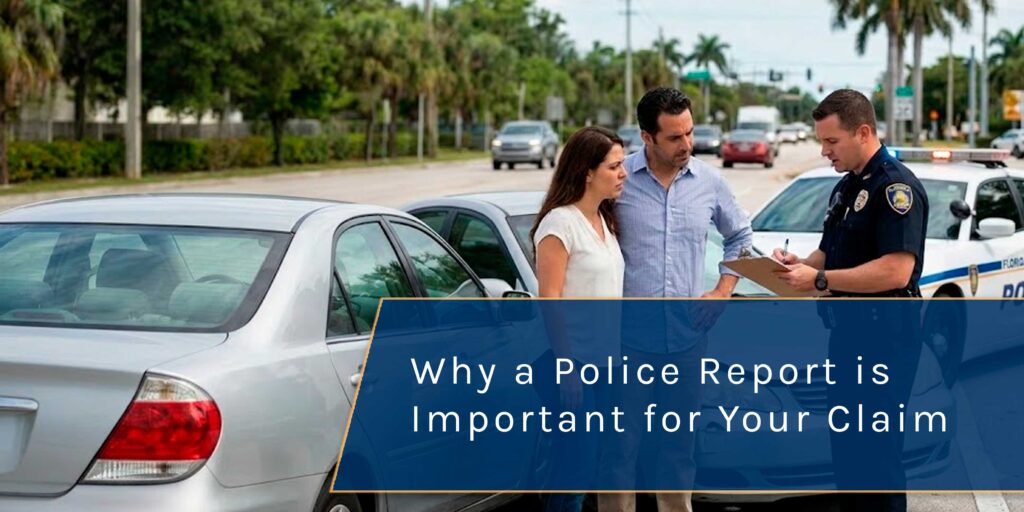
A Florida car accident claim often starts in chaos. You may have questions about whether to call the police because the accident nay look minor or the other driver said they were sorry.
But, often things go sideways in the days to come. Early documentation shapes your claim from day one by creating a time-stamped, third-party record of what happened, who was involved, and what the scene looked like before vehicles are moved and stories change.
Stress also creates gaps. Injuries, shock, and adrenaline can make you forget key details. Meanwhile, the other driver may “remember” the crash differently by the next day. A police report reduces guesswork and gives insurers something concrete to measure your claim against.
Table of Contents
When Florida Law Requires Reporting
Florida requires reporting certain crashes, and the rule matters for your Florida car accident claim. If the collision involves injury, death, or significant property damage, you should treat it as reportable and call law enforcement.
Florida Statute § 316.066(4) addresses the Florida Traffic Crash Report and the legal handling of crash reports. Practically speaking, this means law enforcement creates an official crash report in qualifying cases, and that report becomes a primary reference point for insurers.
Even when a crash seems straightforward, reporting helps. It locks in key facts early, such as the crash location, the drivers involved, and whether anyone appeared hurt. As a result, the report often prevents an insurer from reframing the story later.
Call Law Enforcement Even After a Minor Crash
“Minor” crashes can worsen quickly. Injuries may appear hours later, and visible damage can underestimate the impact. Insurers rely on documentation. When you open a Florida car accident claim, they often request a report number. Without one, delays or denials are more likely.
What a Florida Police Crash Report Includes
A Florida police crash report usually includes the basics that insurers need to start evaluating a Florida car accident claim, including:
- Date, time, and precise location
- Vehicles involved and identifying details
- Driver and passenger information
- Insurance company and policy information
- Witness names and contact details (when available)
- Road, lighting, and weather conditions
- A diagram showing vehicle positions and impact areas
- Citations or contributing factors noted at the scene
The officer’s narrative includes observations like damage, debris, and driver statements, and sometimes an opinion on how the crash occurred. While not final, it can influence negotiations.
Insurers compare these details to physical evidence, such as impact points and skid marks, to assess fault and injuries. Disputes often hinge on issues like lane changes or right of way, making report accuracy critical. In addition, body camera footage can also support your claim by capturing early statements and driver behavior at the scene.
Police Documentation That Often Tips Liability Decisions
Liability often turns on small details. Police reports capture vehicle positions, debris, and lane markings that insurers use to decide fault.
Citations do not prove fault, but they can shift leverage when tied to the crash. A Florida car accident lawyer can use these details, along with photos, video, and witness evidence referenced in the report, to build a stronger claim and push back against the insurer.
How a Police Report Impacts the Insurance Company’s Florida Car Accident Claim Process
Most insurers follow a predictable process for a Florida car accident claim. The police report supports each stage:
- Claim Intake: The insurer opens the file and requests basic crash facts.
- Coverage Review: The carrier confirms active coverage and applicable benefits.
- Liability Review: The adjuster evaluates fault using statements, the report, and evidence.
- Damages Review: The insurer reviews medical records, bills, lost wages, and repair estimates.
A strong report speeds up the early stages. It also reduces “he said, she said” conflict. On the other hand, a sparse report can invite delay. It gives the insurer room to question severity, causation, and even who hit whom.
Using a Police Report to Strengthen a Florida Car Accident Claim
While Florida’s no-fault system means you may start with PIP benefits, those limits are often quickly exhausted and do not cover everything. That makes accurate documentation even more important. As injuries become more serious, you may pursue compensation beyond basic coverage. At that point, the police report becomes critical. It helps establish fault, supports your version of events, and gives insurers a reliable baseline when they evaluate your claim.
PIP does not cover everything. Serious injuries can also open a claim against the at-fault driver. In simple terms, the more severe and lasting the injury, the more likely you may pursue compensation beyond no-fault benefits.
Witness statements can confirm key facts like a red light or unsafe lane change, helping counter denials and blame shifting. The report also supports a clear treatment timeline, making it harder for insurers to argue delays or downplay the impact.
How to Get a Copy of a Florida Car Accident Report
You can request a copy of the Florida Traffic Crash Report through:
- Florida Highway Safety and Motor Vehicles (FLHSMV), or
- The local law enforcement agency that investigated the crash
When you request it, you will typically need crash details, such as the date, location, and parties involved. Once you receive the report, save a clean digital copy. Then share it with your insurer as part of your Florida car accident claim, if they do not already have it.
Correcting Errors in a Police Report
Mistakes happen, and they can hurt a Florida car accident claim. Common errors include:
- Wrong lane or direction of travel
- Incorrect vehicle year, make, or plate information
- Missing witness contact information
- Wrong location details, such as the intersection
- An injury marked as “no injury” despite later treatment
You should act quickly once you spot an error. Here is a practical correction path:
- Get the report and read it line by line.
- Identify factual errors you can prove, such as vehicle info or location.
- Contact the investigating agency and ask about its amendment process.
- Submit supporting evidence, such as photos, medical records, or witness information.
- Request written confirmation of any update or supplement added to the file.
Some agencies amend only clear factual issues. Others add a supplemental note. Either way, you want a paper trail that supports your position.
Disputing Fault When the Report Feels Wrong
A police report can influence your Florida car accident claim, but it is not final. If fault is wrong, it can reduce your settlement unless corrected early.
A lawyer can challenge the report with stronger evidence, including:
- Scene photos showing lane position and damage
- Dashcam or surveillance footage
- Traffic camera footage, if available
- Body camera footage from officers
- Vehicle data (event data recorder)
- Witness statements
Insurers respond to stronger proof. Fixing errors early protects your claim value.
How a Lawyer Strengthens a Florida Car Accident Claim
A Florida car accident lawyer uses police documentation as a foundation, not the whole case. For a Florida car accident claim, counsel can act quickly to protect your position.
First, a lawyer preserves evidence. That includes locating witnesses listed in the report, sending preservation letters for video, and requesting supplemental records. Next, counsel manages insurer contact. That step matters because adjusters often push for recorded statements that can be used against you.
A lawyer also handles disputes over what the report “means.” Insurance companies may cherry-pick phrases from the narrative. They may also downplay injuries by pointing to a lack of ambulance transport. Legal support helps keep the focus on medical proof, crash mechanics, and consistent facts.
Finally, a lawyer improves claim valuation. Many people undercount future care, wage loss, and the daily impact of pain. A well-supported demand package often leads to a more realistic settlement discussion.
FAQs (Frequently Asked Questions)
Why is a police report important in a Florida car accident claim?
A police report creates a time-stamped, third-party record of the crash, capturing key details before evidence changes. It reduces guesswork and gives insurers concrete support for your Florida car accident claim.
When does Florida law require reporting a car accident to law enforcement?
Florida law requires reporting a car accident if it involves injury, death, or significant property damage. Under Florida Statute § 316.066(4), these crashes must be reported so an official Florida Traffic Crash Report can be created, which is key to your car accident claim and insurance process.
What information is typically included in a Florida police crash report?
A Florida police crash report includes key details like the date, time, location, drivers, insurance, witnesses, road and weather conditions, diagrams, citations, and the officer’s narrative—all of which support your Florida car accident claim.
How does a police report influence liability decisions in a Florida car accident claim?
Police reports capture key facts like vehicle positions, debris, lane markings, and any citations. This helps insurers assess fault by showing violations or contributing factors. Supplemental evidence, such as photos or body camera footage, can further strengthen your position during negotiations.
What role does a police report play in the insurance company’s handling of a Florida car accident claim?
The police report supports every stage of a Florida car accident claim, from intake and coverage review to liability and damages. By providing verified facts and evidence, it helps speed up the process and reduce disputes over fault or injury severity.
Start Strong With the Evidence That Shapes Your Claim
A strong Florida car accident claim starts with the right documentation. Your crash report, supplemental notes, and insurance records can directly impact how insurers value your case and assign fault.
At our award-winning firm, we can review your police report for errors, identify missing details, and use that evidence to push back when insurers try to shift blame or minimize your injuries. Contact us at Personal Injury Attorneys McQuaid & Douglas today for a free consultation and take control of your claim from the start.